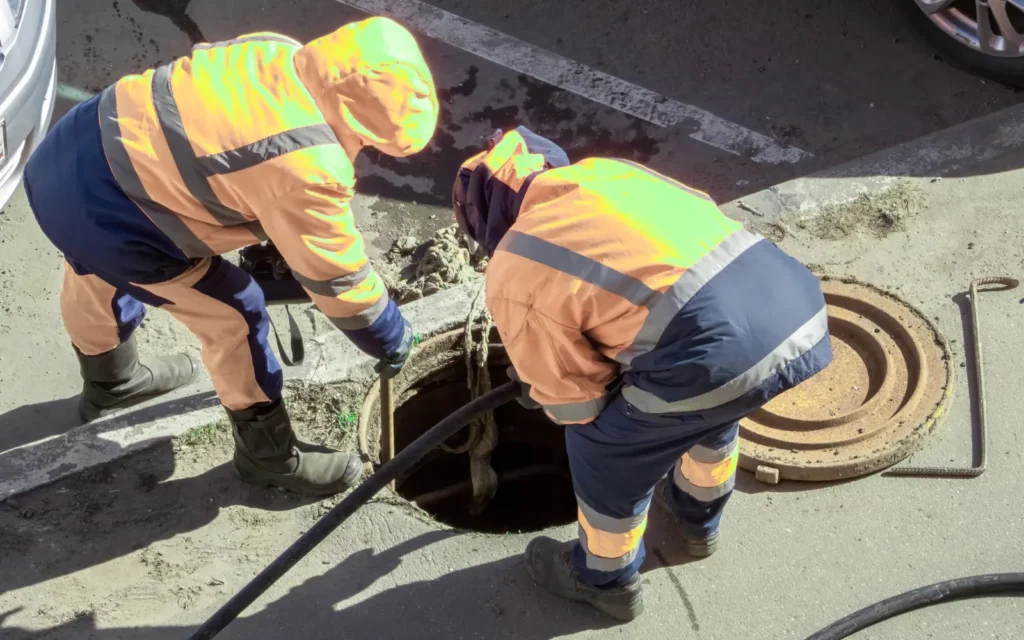
A sewer backup rarely announces itself with warning. One day the drains work fine; the next, wastewater is coming up through the lowest fixture in the house — usually a shower or floor drain, and usually on a weekend. Across the Central Valley, calls for sewer line repair spike every August, and the timing isn’t a coincidence.
The same summer heat that pushes air conditioners to their limit also dries out the clay-heavy soil that most Modesto-area sewer lines sit in. That drying doesn’t damage a sewer line overnight, but it removes the support a cracked or root-compromised line was quietly relying on — and a small existing weakness becomes a full sewer line repair call right as household water use peaks for the season.
Soils with a high clay content — common throughout the Central Valley — absorb water and swell, then lose that moisture and shrink as the weather turns hot and dry. State geological surveys describe this shrink-swell cycle as one of the costliest natural hazards to underground infrastructure in the country, and note that the resulting ground movement can disrupt pipelines and sewer lines that depend on consistent soil support to stay intact.
As the ground contracts during a dry summer, it can pull away from a buried pipe entirely, leaving sections of the line unsupported and more likely to sag, crack, or separate at the joints. None of this is visible from the surface, which is exactly why the problem is usually years in the making before a backup makes it obvious.
Heat and drought add a second factor: tree roots. As topsoil dries out, roots grow more aggressively in search of the one reliable water source nearby — a sewer line, especially at any joint or crack it can reach. The EPA has found that root intrusion is the second-most common cause of sewer line blockages nationally, right behind grease and debris buildup, and both factors tend to compound during long dry stretches.
This is especially relevant for older homes throughout Modesto, Stockton, and the surrounding Central Valley. Many of the same plumbing problems in older homes trace back to original clay or cast iron sewer lines installed decades before today’s more flexible pipe materials existed. And that line — known as the private sewer lateral — is the homeowner’s responsibility to maintain and repair, not the city’s, which is why catching a problem early matters for your wallet as much as your plumbing.
Not every slow drain is a sewer line problem, and not every sewer line problem starts with an obvious backup. The signs worth taking seriously include multiple drains backing up at the same time rather than just one fixture, gurgling sounds from drains that aren’t currently in use, sewage odor in the yard, and a patch of grass over the line that’s noticeably greener than the rest of the lawn — all indicators that wastewater or moisture is escaping into the surrounding soil instead of reaching the sewer main.
A single slow drain is usually a job for professional drain cleaning, not a sign of a failing sewer line. The difference matters, because treating a sewer line problem like a simple clog wastes time while the underlying crack or root intrusion continues to get worse.
A backup that reaches multiple fixtures is not a wait-and-see situation. Raw sewage carries bacteria, parasites, and viruses that pose a real health risk on contact, which is why public health guidance treats any sewage exposure as something to avoid handling without the right equipment and training.
A damaged sewer line used to mean digging a trench the full length of the pipe — through landscaping, driveways, and sometimes foundations — just to access and replace it. Trenchless methods, including cured-in-place pipe lining and pipe bursting, now allow a damaged line to be rehabilitated or replaced through a single access point in many cases, according to the National Association of Sewer Service Companies — the industry body that sets the technical standards these methods follow.
Not every sewer line problem qualifies for a trenchless fix. A severely collapsed or badly misaligned section may still require traditional excavation. But for a line with isolated cracks, root intrusion, or joint separation, trenchless repair typically means far less disruption to a yard that’s already stressed by a dry Central Valley summer.
Sewer line repair pricing depends heavily on what’s actually found once a camera inspection identifies the problem — the depth of the line, how much of it is affected, and whether a localized trenchless repair or a full replacement is the right call. That’s why an accurate estimate almost never comes from a phone call alone, and why a quote that skips the inspection step is worth a second look.
Sewer line work is exactly the kind of job where hiring the wrong company costs more than money — a botched trenchless liner or an incomplete root removal can mean redoing the work within a year. The same questions worth asking before hiring any plumbing and HVAC company apply here, with added weight on trenchless-specific experience and equipment.
For homeowners who’ve dealt with root intrusion or line issues before, routine camera inspection through a maintenance plan like our Care Club membership can catch a developing problem well before it becomes an August emergency.
A sewer line doesn’t fail because of one hot week. It fails because years of soil movement, root growth, and pipe age all converge, and summer heat is usually what finally tips a marginal line into a real problem. Catching the warning signs early, understanding that the lateral is your responsibility to maintain, and knowing that trenchless options exist all put you in a stronger position than waiting for a backup to make the decision for you.
If you’re noticing slow drains, sewage odor, or an unusually green patch of lawn, a camera inspection is the fastest way to know what you’re dealing with before it becomes an emergency. Ask about current specials or financing options if cost is a factor in deciding between repair and replacement, and schedule an inspection today to get ahead of the Central Valley’s toughest season for older sewer lines.
A single slow drain is usually a clog. Multiple drains backing up at once, gurgling from fixtures that aren’t in use, sewage odor outdoors, or an unusually green patch of lawn over the line point to a sewer line problem instead.
The homeowner. The private sewer lateral connecting your house to the street main is your responsibility to maintain and repair under Modesto’s municipal code, even though the main line running under the street belongs to the city.
Trenchless repair uses methods like cured-in-place pipe lining or pipe bursting to rehabilitate or replace a line through a single access point instead of a full trench. It works well for cracks, root intrusion, and joint separation, but a severely collapsed line may still need traditional excavation.
Pricing depends on what a camera inspection actually finds — the location and severity of the damage, the pipe’s depth, and whether the fix is a localized repair or a full trenchless or excavated replacement. An accurate number requires an inspection, not just a phone estimate.