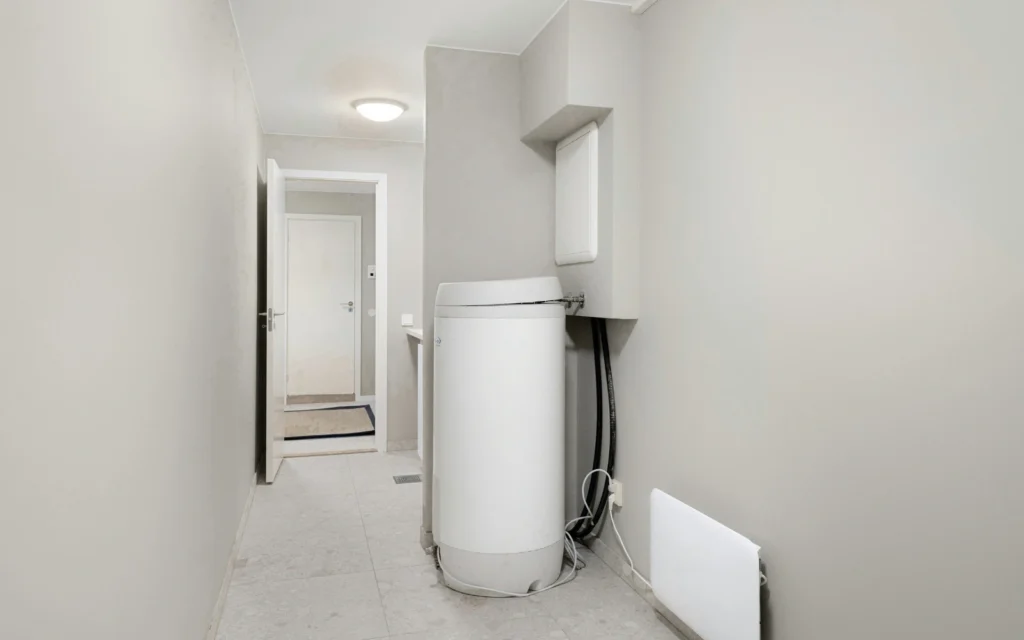
Replacing a water heater is one of the only major home systems most people never think about until it fails — usually without warning, and usually while a hot shower is running. When that happens, the question almost every homeowner asks first is how much water heater installation is actually going to cost.
The price depends less on the water heater brand than most people assume. In California, code requirements — permits, seismic strapping, and energy standards — add real cost to every installation, and a licensed plumber has to account for all of them to pass inspection. This guide breaks down what actually drives water heater installation cost in California, where tank and tankless systems diverge in price, and what a compliant installation should include.
The single biggest driver of installation cost is which type of system you’re installing. Storage tank water heaters remain the most common option because they supply a ready reserve of hot water at a lower upfront cost, while tankless units heat water on demand without holding a reserve at all, according to the U.S. Department of Energy. Because tankless systems often require new venting, a larger gas line, or an electrical upgrade to run at full capacity, they typically cost more to install even when the unit price is similar to a tank model.
Fuel type is the second major factor, and it affects more than the monthly utility bill. The Department of Energy notes that your choice of fuel source shapes the water heater’s annual operating cost as well as its physical size and efficiency, which is why switching fuel types during a replacement — electric to gas, for example — usually adds cost for new gas line connections that a straightforward swap wouldn’t require.
Capacity is the third factor, and it’s the one homeowners most often get wrong on their own. A tank sized too small runs out of hot water during normal household use, while a tank sized too large wastes energy heating water no one uses — both mistakes a licensed plumber accounts for during a proper installation rather than an identical swap of the old unit. It’s the same principle behind sizing a home’s HVAC system correctly: get the capacity wrong in either direction, and the equipment works harder than it should for the rest of its service life.
This mismatch shows up most often in older homes. The original water heater was frequently sized for a smaller household and never resized as fixtures and appliances were added over the years — one of several plumbing problems in older homes worth addressing at the same time as a water heater replacement.
A tank water heater is typically the lower-cost installation because it uses your home’s existing venting, gas line, and water connections with only minor modification. A tankless system, by contrast, often needs a larger gas line to deliver the higher heat output it requires, upgraded venting rated for its exhaust temperature, and in some cases a new electrical circuit — work that adds labor and material cost before the unit itself is even mounted.
The efficiency difference between the two is real, but it shouldn’t be the only number used to decide between them. The Department of Energy specifically cautions against choosing a water heater model based on energy factor alone, since size, first-hour rating, fuel type, and total installed cost all factor into the true value of the system.
For most Central Valley homes, the installation cost gap between tank and tankless narrows considerably when the home already has adequate gas line capacity and venting clearance — which is exactly why an in-home evaluation, rather than a phone quote, is the only reliable way to price either option.
Every water heater installation in California requires a plumbing permit, including a straightforward like-for-like replacement of the same fuel type and capacity. Municipal code guidance published by city building departments across the state ties this requirement directly to California Plumbing Code Section 502.1, and it applies whether the job is scheduled in advance or done as an emergency replacement.
California law also requires every residential water heater — new, replacement, or existing — to be braced, anchored, or strapped to resist movement during an earthquake, under Health and Safety Code Section 19211. This requirement isn’t optional or limited to certain regions of the state; it’s one of the first things checked during a home inspection or before a property sale.
These code requirements are also why installation cost isn’t the same thing as the price tag on the unit. Permit fees, inspection scheduling, and the correct strapping hardware are line items that show up on every legitimate California quote — and their absence from a bid is a red flag, not a bargain.
California’s Contractors State License Board recommends confirming a contractor’s license status before any work begins, since hiring an unlicensed installer can leave a homeowner responsible for correcting code violations that surface later during an inspection or home sale.
A licensed plumber pulls the permit, schedules the required inspection, and stands behind the installation — all of which is built into a legitimate quote. Choosing the lowest bid without confirming licensing status often means paying for that work twice: once informally, and again when a licensed contractor has to correct it to pass inspection. Doing a little homework on how to choose the right plumbing and HVAC company up front saves both the money and the aggravation.
The real cost of water heater installation in California is the sum of the unit, the labor, and the code compliance work that a legitimate installation always includes. Skipping any one of those steps — the permit, the strapping, the licensing — doesn’t lower the price of a safe installation. It just moves the cost to whoever has to fix it later.
If your water heater is nearing the end of its typical service life, or you’re weighing tank versus tankless, the most reliable way to get an accurate number is an in-home evaluation from a licensed plumber who accounts for your home’s existing gas line, venting, and electrical capacity. The same signs that tell you it’s time to replace a plumbing fixture often show up around the water heater at the same time, so it’s worth having both looked at together.
If you’re weighing similar repair-versus-replace math for your air conditioner, our guide on how much AC repair costs breaks down that decision the same way.
Tony’s Plumbing has been installing and replacing water heaters throughout Modesto, Stockton, and the greater Central Valley since 1994. Ask about current specials or financing options if cost is a factor in your decision, and consider our Care Club membership for the kind of routine maintenance that helps a new water heater reach its full service life. Schedule an evaluation today for a quote that reflects your actual home, not a generic estimate.
Yes. California Plumbing Code Section 502.1 requires a permit for every water heater installation or replacement, including a same-type, same-capacity swap.
Usually. The added cost typically comes from upgraded gas lines or venting a tankless system requires, not from a large difference in the price of the unit itself.
A straightforward tank replacement generally takes a few hours. A tankless installation, or a switch between fuel types, can take longer depending on the gas line, venting, or electrical work involved.
Homeowners can legally pull their own permit as an owner-builder, but they become personally responsible for correcting any code violations found at inspection — which is why most choose a licensed plumber to handle the installation and the permit together.