If you’ve noticed white crusty buildup on your faucets, hard water is likely destroying your plumbing system from the inside out. Here in Modesto and throughout the Central Valley, we’re dealing with some of California’s hardest water, typically 10-15+ grains per gallon.
That mineral-heavy water flowing through your pipes every single day isn’t just leaving spots on your dishes. It’s quietly accumulating inside your plumbing, shortening equipment life, driving up energy bills, and setting you up for expensive failures down the road.
The good news? Once you understand what’s happening and why, you can prevent thousands of dollars in premature replacements and repairs. Let’s break down exactly how hard water damages your plumbing and what you can do about it.
Hard water is water loaded with dissolved minerals (primarily calcium and magnesium).
Water Hardness Classifications:
The Reality: 85% of American homes have hard water. Central Valley groundwater typically measures 10-15+ GPG, with some areas testing even higher.
Hard water damages plumbing gradually, beginning inside your pipes, where mineral buildup quietly alters water flow, heat transfer, and pipe integrity. Over time, calcium and magnesium deposits harden into scale, narrowing pipes and accelerating wear across your entire system.
Each time hard water moves through your plumbing, minerals cling to pipe walls and harden into limescale. Even a thin layer has an outsized impact. Just ⅛ inch of scale can reduce effective pipe diameter by 25–30%, significantly lowering water pressure.
Pipe material affects how quickly damage develops:
Once scale forms, it does not flush out. It continues to grow.
As scale thickens, a standard ¾-inch supply line effectively shrinks to ½ inch or smaller. This restriction shows up as
Clogged showerheads and aerators appear first, but they are symptoms of deeper pipe restriction.
Hard water minerals also speed corrosion. Copper pipes develop pitting and pinhole leaks, while galvanized pipes lose their protective zinc coating and rust rapidly. Warm Central Valley water accelerates these reactions, which is why leaks often appear suddenly after years of unseen damage.
Water heaters suffer the most severe effects. As water heats, minerals fall out of solution and settle as sediment in the tank. This causes:
Tankless systems are also vulnerable. Without treatment, mineral scale coats heat exchangers and often leads to failure within 5–7 years.
If minerals are visible on fixtures, they’re accumulating inside pipes.
Scale buildup increases energy usage significantly.
This signals pipe corrosion has begun.
Quick Test: Inexpensive test strips from hardware stores measure hardness in minutes. Or call us at 209-301-8620 for free water testing.
| Equipment | Normal Life | Hard Water Life | Replacement Cost |
| Water heaters | 12-15 years | 7-10 years | $1,500-$3,500 |
| Dishwashers | 10-12 years | ~7 years | $600-$1,200 |
| Washing machines | 12-15 years | ~8 years | $800-$1,500 |
10-year impact: $2,000-$5,000 in avoidable replacements.
Severe buildup and corrosion require repiping:
The Real Numbers:
A water softener isn’t an expense—it’s protection against thousands in damage.
These reduce symptoms but don’t remove minerals:
These are maintenance tasks, not solutions.
A whole-house water softener is the only effective way to stop hard water damage.
How It Works: Salt-based systems use ion exchange. Calcium and magnesium are captured in a resin bed and replaced with sodium. The system regenerates periodically with salt brine.
Salt-Based vs. Salt-Free:
Only salt-based systems provide full protection.
What’s Involved:
Maintenance:
Based on 30+ years of protecting Modesto homes from hard water:
Prevention (softener) + proper maintenance = decades of trouble-free plumbing.
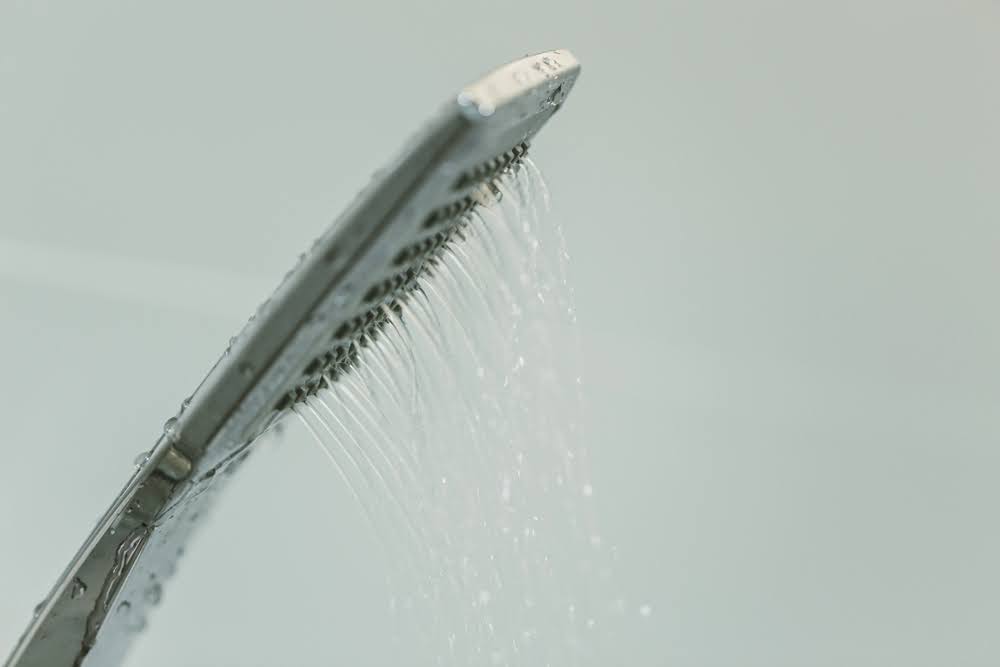
Low water pressure problem closeup at shower head in white bathroom
Hard water damage is one of the most preventable causes of plumbing failure in Central Valley homes. With the right protection in place, you can stop mineral buildup before it shortens equipment life, raises utility bills, or forces emergency repairs.
We’ve been protecting Modesto homes from hard water damage since 1994. Whether you’re already seeing signs of buildup or want to prevent problems before they start, we’ll test your water, evaluate your plumbing honestly, and help you choose solutions that make sense for your home and budget.
Whether you’re seeing signs of hard water damage or want to prevent it before it starts, we’re here to help. Let’s test your water hardness, assess your plumbing system honestly, and discuss solutions that make sense for your home and your budget. Contact us at Tony’s Plumbing for straightforward answers about protecting your plumbing from hard water damage.
Does hard water cause plumbing issues?
Yes. Causes mineral buildup inside pipes, restricts flow, accelerates corrosion, and reduces water heater efficiency by 25-30%, leading to premature failures.
How long do pipes last with hard water?
Copper pipes: 30-40 years instead of 40-50. Galvanized pipes fail even sooner. Damage accelerates as scale narrows pipes and promotes corrosion.
Is soft water better for your plumbing?
Yes. Prevents scale buildup, extends water heater life by 30-50%, maintains full pipe diameter, and significantly reduces repairs.
How do you fix hard water buildup in pipes?
Minor buildup can sometimes be reduced with professional descaling, but severe scale requires pipe replacement. Installing a water softener prevents future buildup but can’t fully reverse advanced damage.
Can you reverse hard water damage to pipes?
Only partially. Mild to moderate scale may be reduced, but corrosion and severe buildup are permanent and require replacement.
What breaks down calcium deposits in pipes?
Vinegar works for fixtures. Plumbers use stronger descaling acids for limited pipe treatment. Removing calcium from entire plumbing systems is impractical—prevention is better.
How long does it take for hard water to damage pipes?
Surface buildup: months. Internal pipe restriction: 5-10 years. Water heater efficiency loss: 2-3 years in hard water areas.
Will a water softener help if I already have hard water damage?
Yes. Immediately stops new mineral buildup and prevents further damage. Existing scale and corrosion remain and may still require repair or replacement.
How much does a water softener cost to install?
$1,500-$3,500 depending on system size and complexity. Most systems pay for themselves within 2-4 years through reduced repairs and energy savings.
Does hard water affect PEX piping?
PEX resists buildup better than metal pipes, but fixtures, valves, appliances, and water heaters are still affected. A water softener protects these vulnerable components.