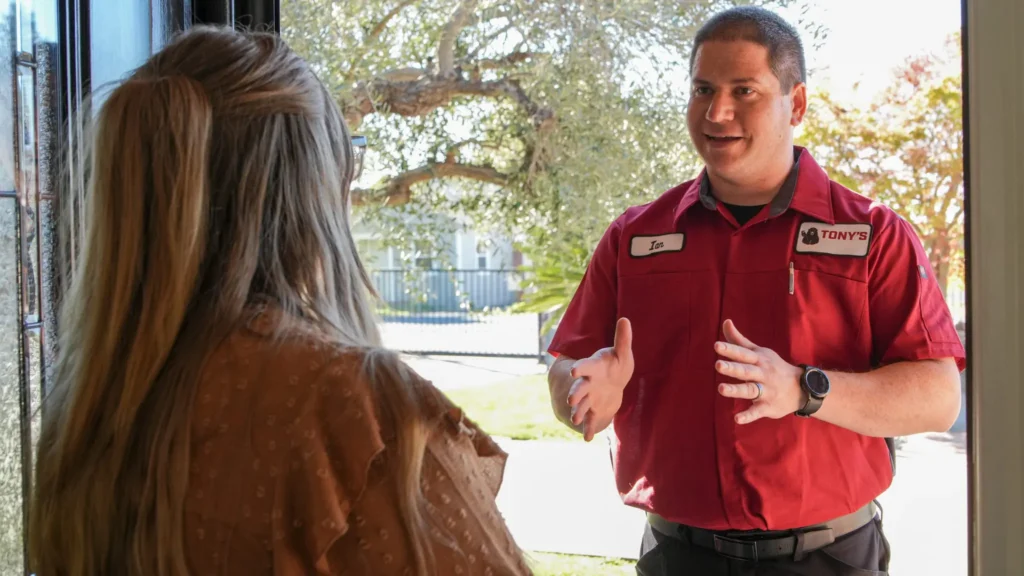
Learning how to find a water leak in your house starts with the water meter test. A homeowner records the meter reading, avoids using water for two hours, and reads the meter again. A changed reading suggests a leak. From there, checking toilets, faucets, showerheads, and irrigation covers the most common sources, and a licensed plumber can locate leaks hidden in walls or under floors.
Knowing how to find a water leak in your house can help prevent a surprise water bill, damaged drywall, and mold. Most leaks begin small and stay out of sight. The checks below follow a simple order: warning signs first, then the water meter test, then the common culprits, and finally the point where professional help makes sense. The guidance draws on the U.S. Environmental Protection Agency (EPA) and the California Department of Insurance.
A water leak does not always announce itself. Several signs, alone or together, may point to one:
Low water pressure can also accompany a leak, though pressure problems have many other causes, so low pressure alone is not enough to confirm one.
The water meter test is the most reliable first step because it checks the whole system at once. The EPA describes the basic method:
| Meter result after two hours | What it may mean | Next step |
|---|---|---|
| No change | No continuous leak between the meter and the fixtures was detected during the test. A small or intermittent leak may still exist | Run the toilet dye test and check fixtures and outdoor lines |
| Reading changed | Water is moving somewhere with no fixture in use, which suggests a leak | Check the common sources below, then call a plumber if none explains it |
| Reading changed and no source found | A hidden leak in a wall, under a floor, or underground may be present | Schedule professional leak detection |
Before suspecting a hidden pipe, a homeowner can check the fixtures and lines that leak most often. The EPA identifies these common sources:
| Source | Quick check | What the EPA reports |
|---|---|---|
| Toilets | Add a few drops of food coloring to the tank, wait 10 minutes without flushing, and look for color in the bowl. Flush right away afterward to prevent staining | Worn flappers are a common cause and should be checked periodically and replaced at least every five years |
| Faucets | Look and listen for drips at the spout and under the sink | A faucet dripping about once per second can waste more than 3,000 gallons a year |
| Showerheads | Check the connection between the showerhead and the pipe stem | Loose connections are often fixed with pipe tape |
| Irrigation and outdoor lines | Look for pooling water, unusually green patches, or wet soil when the system is off | A leak about 1/32 of an inch wide can waste roughly 6,300 gallons a month |
Color in the toilet bowl after 10 minutes means the tank is leaking into the bowl, which is usually a simple and inexpensive repair.
A leak inside a wall is harder to confirm because the pipe is out of sight. Signs usually show up on the surface first: a stain that spreads, paint that bubbles or peels, drywall that feels soft, or a musty smell. A meter that moves with every fixture off, combined with one of these signs, raises the likelihood of a wall leak.
A few low-risk steps may help narrow the location:
Timing matters once a leak is found. The EPA states that water-damaged areas and items should be dried within 24 to 48 hours to prevent mold growth. If the water is fixed but the area stays wet, mold may return even after cleanup.
Some leaks need an immediate response, and others can be scheduled. The table below separates the two. A broader guide to urgent situations is available in the post on finding an emergency plumbing service.
| Situation | Emergency? | First step |
|---|---|---|
| Water is flowing or spraying and cannot be stopped | Yes | Close the main water shutoff valve, then call a licensed plumber right away |
| Water near electrical outlets, a panel, or a sagging ceiling | Yes | Stay clear of the area, shut off the water if it is safe to reach the valve, and call for help |
| Sewage or dirty water backing up | Yes | Keep people and pets away and call a plumber. The EPA notes that sewage can carry disease-causing organisms, so cleanup is not a casual DIY job |
| Meter moves with no visible leak | Not usually, but soon | Schedule leak detection and watch for new stains or damp spots |
| Slow drip from a faucet or toilet running on | No | Plan a repair, since the water loss still adds up |
A professional is the practical choice once the meter test shows movement and the common sources check out. Plumbers commonly isolate sections of the system to narrow down where the water is being lost, then pinpoint the spot using equipment suited to the situation. Methods vary by company and by what the leak requires, and may include listening equipment, thermal imaging, or pressure testing. The aim is to find the exact location so that a repair opens as little of the wall or floor as possible.
Choosing a licensed contractor matters. The California Contractors State License Board (CSLB) requires a license for projects of $1,000 or more in combined labor and materials, and recommends checking a contractor’s license at cslb.ca.gov before hiring. Tony’s Plumbing, Heating & Air has served the Central Valley since 1994, and homeowners can see the company’s professional leak detection services and its full service area.
Coverage depends on the cause. The California Department of Insurance explains that homeowners policies typically cover sudden and accidental water damage, such as a pipe that bursts without warning. Damage from long-term seepage or leaks, wear and tear, and lack of maintenance is typically excluded. The National Association of Insurance Commissioners (NAIC) adds that neglect can jeopardize a claim, which is one reason a suspected leak is worth investigating promptly.
Whether the cost of locating a leak is covered varies by policy. A homeowner can ask the insurance company or agent before scheduling work, and photos of any damage plus the dated invoice from the plumber help document the claim. More on how leaks turn into larger problems is available in the related posts on sewer leaks and water damage risks and how sewer leaks lead to mold and mildew.
Prevention mostly comes down to catching small problems early:
Finding a water leak that isn’t visible usually starts with the water meter test. A homeowner records the meter reading, avoids using any water for two hours, and reads the meter again. A changed reading suggests a leak somewhere between the meter and the fixtures. Checking toilets with a dye test and looking for damp spots, stains, or a musty smell may narrow the search. A licensed plumber can locate a leak inside a wall or under a slab when these checks do not find the source.
A homeowner can often tell there is a water leak from a rising water bill, the sound of running water when every fixture is off, damp spots or stains on walls and ceilings, a musty smell, or a water meter that keeps moving with no water in use. Any one of these signs may have another cause, so the meter test and a toilet dye test help confirm whether water is actually being lost.
Finding a water leak in a wall typically begins with the signs on the surface: a stain that grows, bubbling or peeling paint, soft drywall, or a musty smell. Checking the fixtures and supply lines on the other side of the wall, and running the water meter test, may point to the source. Cutting into a wall without knowing where pipes and wiring run can cause more damage, so a licensed plumber is usually the safer choice for confirming and locating a wall leak.
A small leak can waste a surprising amount of water over time. The EPA reports that the average household loses more than 9,300 gallons of water a year to leaks. The EPA also estimates that a faucet dripping about once per second can waste more than 3,000 gallons a year, and that a leak about 1/32 of an inch wide in an irrigation system can waste roughly 6,300 gallons a month.
A water leak is an emergency when water is flowing or spraying and cannot be stopped, when water is near electrical outlets or a sagging ceiling, or when the water is sewage. A slow drip or a leak found only by the meter test is usually not an emergency, but a repair should not wait long, because EPA guidance says wet materials generally need to be dried within 24 to 48 hours to help prevent mold.
Home insurance coverage for water leak detection depends on the policy. The California Department of Insurance notes that homeowners policies typically cover sudden and accidental water damage, while damage from long-term seepage or leaks, wear and tear, and neglect is typically excluded. Whether the cost of finding a leak is covered varies by insurer, so a homeowner should ask the insurance company or agent before scheduling work.
A water leak rarely fixes itself, and the cost of waiting usually grows with the damage. When the meter test shows movement and no visible source turns up, Tony’s Plumbing, Heating & Air can help locate the leak. Homeowners can read about leak detection or contact the team to schedule a visit.