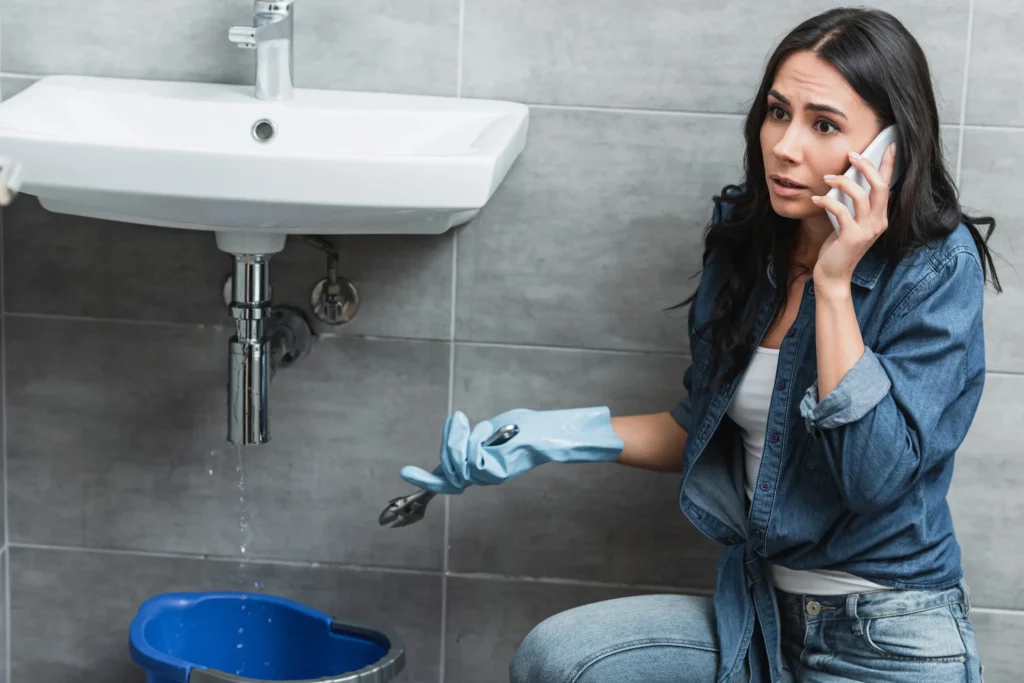
Most homeowners hold on to plumbing fixtures longer than they should. A faucet that drips occasionally seems like a minor nuisance. A toilet that takes two flushes feels like an old quirk. A showerhead with uneven spray is just something you work around. But these habits have a cost: the U.S. Environmental Protection Agency estimates that household leaks waste nearly one trillion gallons of water annually across the country, much of it from fixtures that have simply worn past their useful life.
The signs that a plumbing fixture needs to be replaced are usually visible long before failure. You just have to know what you are looking at. This post covers the most common indicators across faucets, toilets, and showerheads, along with the question most homeowners actually need answered: should I repair it or replace it?
A faucet that drips after you turn it off is the most common warning sign, but it is also the most misread. A single worn washer or cartridge can often be swapped out for a few dollars. The problem is that repeated repairs on the same fixture usually signal something bigger: the internal components are failing progressively, and each fix buys less and less time.
Corrosion visible on the body or handles is a clearer signal. Once rust or green oxidation forms on the exterior, the same process is happening inside the valve seat, cartridge housing, and supply connections. Corroded fittings are difficult to repair cleanly and are prone to leaking at the base or around the handle, not just the spout.
Low or uneven water pressure from a single faucet is often caused by a clogged aerator, which is a simple fix. However, if cleaning the aerator does not restore normal flow, the culprit is usually internal mineral buildup from hard water, a problem that accelerates in the Central Valley where water hardness routinely runs in the hard to very hard range. At that point, replacement is more cost-effective than continued maintenance.
A practical guideline: most quality faucets last between 15 and 20 years under normal use. If your fixture is approaching or past that range and showing any of the signs above, replacement is the right call. If it is relatively new and only one component has failed, repair makes more sense.
The most expensive toilet problem is the one you cannot see. A toilet that runs intermittently, or that requires you to jiggle the handle to stop, is wasting water constantly. The EPA’s WaterSense program estimates that a running toilet can waste as much as
200 gallons of water per day, which shows up directly on your water bill. In many cases, the fix is a worn flapper or fill valve, both of which are inexpensive parts. But if the toilet has already had those parts replaced and is still running, the issue is usually the flush valve seat itself, and at that stage replacement often makes more economic sense.
Cracks in the porcelain are a straightforward replacement trigger. A hairline crack in the tank can sometimes be sealed temporarily, but a crack in the bowl cannot. Porcelain that bears weight will eventually fail along any stress fracture, and a bowl that fails while in use is a safety issue as much as a plumbing issue.
Older toilets also represent a significant water efficiency gap. Toilets manufactured before 1994 were built before federal water efficiency standards took effect, and many use 3.5 to 7 gallons per flush. Modern WaterSense-certified toilets are required to use no more than 1.28 gallons per flush, which is a reduction of more than 50 percent on older models. If your toilet is from the early 1990s or before, replacement pays for itself in water savings over time.
Frequent clogging that does not respond to standard plunging usually indicates either a partial clog further down the drain line or a low-flush toilet that was not designed for the home’s drain slope. A licensed plumber can help you distinguish between the two before you decide whether the solution is a drain cleaning or a new fixture.
A showerhead with mineral deposits clogging the spray nozzles can usually be cleaned with a vinegar soak, which is worth trying before replacing anything. What signals a replacement need is when the buildup returns quickly after cleaning, the spray pattern is permanently uneven despite cleaning, or the head is cracked or corroding at the connection point.
Spray that comes out at inconsistent pressure, including a combination of high-flow nozzles and completely blocked ones, usually means the internal diverter or flow restrictor has worn out. These components can sometimes be replaced individually, but on a showerhead that is more than ten years old, the repair cost often approaches the cost of a new unit.
Water efficiency is another reason to evaluate older showerheads. Standard showerheads manufactured before current efficiency guidelines flow at 2.5 gallons per minute. WaterSense-certified showerheads are required to use no more than 2.0 gallons per minute, and many high-performance models operate at 1.5 gallons per minute without a meaningful loss in spray pressure. The EPA estimates that replacing an older showerhead with a WaterSense model saves the average family approximately 2,700 gallons of water per year.
The most reliable rule is the 50 percent threshold: if the cost of repairing a fixture exceeds half the cost of replacing it, replacement is almost always the better investment. A new fixture comes with a warranty, current efficiency standards, and no deferred maintenance. A repaired old fixture is still an old fixture.
Age is the second factor. A fixture that is under ten years old and has had its first significant problem repaired once is a reasonable candidate for continued use. A fixture that has been repaired multiple times, or that is showing corrosion and wear across multiple components simultaneously, is telling you it is at the end of its service life.
Hard water compounds both timelines. In the Central Valley, mineral buildup accelerates corrosion inside faucet cartridges, reduces showerhead lifespan, and causes sediment accumulation inside toilet fill valves. Fixtures that might last 20 years in soft water areas often need replacement sooner here. If you are replacing fixtures repeatedly on a shortened cycle, a water softener assessment is worth adding to the conversation.
One category where replacement should be non-negotiable: any fixture that was manufactured before 1986 and that dispenses water for drinking or cooking. Fixtures from that era may contain lead in the fittings, which leaches into the water supply. The EPA’s Safe Drinking Water Act regulations require lead-free plumbing materials in new installations, but older fixtures are exempt unless replaced.
Modesto, Turlock, Stockton, and the surrounding San Joaquin Valley cities sit in one of the hardest water regions in California. The United States Geological Survey classifies water with more than 10.5 grains per gallon as very hard; much of the Central Valley groundwater supply falls in this range or above it.
Hard water deposits calcium and magnesium minerals on every surface it contacts, including the inside of your plumbing fixtures. Over time, these deposits narrow the openings inside faucet cartridges, block showerhead nozzles, accumulate in toilet fill valves, and accelerate the corrosion of metal components. What this means practically is that fixtures here tend to wear out faster than the national averages, and visible scaling on the exterior of a fixture is a reliable signal that the same process has been happening inside it for years.
Routine maintenance can slow this process: cleaning aerators, soaking showerheads in vinegar, and flushing fill valves periodically. But there is a limit to what maintenance can do in high-mineral water without addressing the source. A whole-house water softener reduces mineral exposure across your entire plumbing system, not just the fixtures you can see.
It depends on the fixture type and water quality. Quality faucets generally last 15 to 20 years. Showerheads can last 10 years or longer with proper cleaning. Toilets themselves last decades, though internal components like flappers, fill valves, and wax seals need periodic replacement. In hard water areas like the Central Valley, all of these timelines shorten.
Replacing a showerhead is one of the simpler DIY plumbing tasks, requiring only a wrench, plumber’s tape, and the new fixture. Faucet replacement is manageable for homeowners comfortable under a sink, though the existing shutoff valves need to work properly first. If the shutoff valves are old, corroded, or difficult to turn, it is better to have a licensed plumber handle the project so you do not end up with a more complicated repair.
The EPA estimates that a running toilet can waste as much as 200 gallons of water per day. At typical Central Valley water rates, that adds up to a meaningful increase on your monthly bill, often $20 to $50 or more depending on how severely the toilet is running. The flapper, which is the most common cause, costs a few dollars and takes about 30 minutes to replace.
Not necessarily. A targeted replacement approach, starting with the fixtures showing the most wear or inefficiency, is often more practical than replacing everything at once. A licensed plumber can walk through your home, assess the condition of each fixture, and give you a prioritized list. Toilets in homes built before 1994 and fixtures approaching 20 years of age are typically first priority.
The safest approach is to check the age of the fixture and the home. If your home was built before 1986 and still has original faucets, there is a possibility of lead in the fixture body or solder connections. The EPA’s guidance on lead in drinking water recommends replacing fixtures that may contain lead, particularly those used for drinking or cooking water. A licensed plumber can help you identify which fixtures should be prioritized.
Plumbing fixtures give you warnings before they fail completely. The drip that comes back three months after you fixed it, the toilet that runs for 30 seconds after every flush, the showerhead that cuts your water pressure in half: these are not quirks to work around. They are the fixture telling you it is running out of service life.
Acting on those signals before a fixture fails outright saves you the cost of water damage, the inconvenience of emergency repairs, and the higher bill that comes from a fixture wasting water for months before you get around to it. In Central Valley homes, where hard water accelerates wear on every fixture in the house, staying ahead of the replacement cycle matters more than it does in most other regions.
Tony’s Plumbing, Heating and Air has been serving Modesto, Turlock, Stockton, and the surrounding Central Valley since 1994. If you have a fixture that is showing signs of wear, running up your water bill, or simply past its expected service life, we can help you assess whether a repair or replacement makes more sense, and handle the work correctly the first time. Call us for emergency plumber service or schedule service through our website here.