That bottle of chemical drain cleaner under your sink promises a quick fix. What it often delivers instead is pipe damage, stubborn clogs that don’t fully clear, and $500+ repair bills down the line.
Chemical drain cleaners can generate temperatures approaching 200°F inside your pipes, warping plastic, corroding metal, and weakening joints. They are also poor at effective drain cleaning, failing on the most common causes of clogs like hair, grease, and soap scum. The result is plumbing that looks clear on the surface but is left damaged and one emergency away from failure.
Here’s what really happens when you pour chemical cleaners down your drain and which drain cleaning methods actually work without putting your plumbing at risk.
Lye-based cleaners (Drano) create reactions reaching 200°F inside pipes.
Damage:
Chemical cleaners don’t dissolve common clogs:
They push debris deeper or create recurring partial clogs.
| Cleaner Type | Pipe Damage Risk | Common Failures |
| Lye-based (Drano) | HIGH—melts PVC | Doesn’t dissolve hair |
| Acid-based | MEDIUM – corrodes metal | Toxic fumes |
| Enzyme gels | LOW—but slow | Ineffective on grease |
Plumber Reality: We see chemical cleaner damage constantly warped pipes, corroded joints, and systems that fail unexpectedly. The “quick fix” becomes expensive repairs.
These clear 80% of household clogs without pipe damage.
Why It Works: CO₂ bubbles physically agitate and break down buildup without heat or corrosion.
Best For: Soap scum, light grease, minor hair clogs, preventive maintenance
Best For: Soap scum, light grease, bathroom sinks
Warning: Use hot (not boiling) water on PVC pipes under sinks.
Best For: Kitchen sink grease, garbage disposal maintenance
Best For: Hair clogs, organic buildup, septic-safe maintenance
Best For: Bathroom hair clogs near surface
Impact: Regular maintenance cuts clogs by 50%.
Yes—with limits.
What It Does:
What It Doesn’t Do:
Plumber Truth: Great for maintenance and minor clogs. If it doesn’t clear after 2 tries, you need professional equipment. Don’t keep repeating that’s when you push clogs deeper or damage pipes.
| Mistake | Why It’s Bad | Do This Instead |
| Overusing same method | Wastes time, pushes clogs deeper | Try 2x max, then call pro |
| Mixing cleaners | Toxic fumes, explosive pressure | NEVER mix chemicals |
| Ignoring slow drains | Becomes full blockage | Address immediately |
| Forcing snake tools | Punctures pipes | Stop at resistance |
Kitchen:
Bathroom:
Reality: $5 drain strainers prevent $200 emergency calls.
Hair is the most common bathroom clog and the hardest for chemicals to dissolve.
Keratin protein structure resists most chemical reactions. Standard cleaners can’t break it down; manual extraction beats chemicals every time.
Step-by-Step:
| Tool | Cost | Best For |
| Plastic drain snake | $3-10 | 1-2 feet depth, disposable |
| Wire drain auger | $10-25 | Deeper clogs, reusable |
| Wet/dry vacuum | $50+ | Suction extraction |
| Wire hanger | Free | Near drain opening |
Reality: Hair clogs are 100% preventable with drain covers.
After 30+ years clearing Modesto drains, here’s the truth.
Great for:
Works for 60-70% of minor clogs. Safe, cheap, effective.
Won’t work for:
Mechanical Snaking
Professional augers reach 50-100+ feet, cutting through clogs no chemical can touch.
Hydro Jetting
High-pressure water (3,000-4,000 PSI) scours pipes clean, removing grease, scale, and buildup better than any product.
Camera Inspection
Shows exactly what’s causing the clog and where.
Commercial-Grade Enzymes
Professional strength works better than consumer products.
Baking soda and vinegar are solid for maintenance. Use it monthly. But if you’ve got a real clog that doesn’t clear with 1-2 treatments, call us instead of fighting it.
We’ve seen too many situations where repeated DIY pushes clog deeper or damage pipes. A $150 service call beats a $2,000 pipe replacement.
Chemical Drain Cleaners – Ever
The damage isn’t worth it. We repair more pipes damaged by chemicals than original clogs.
Repeated DIY Attempts
If it didn’t work the first time, it won’t work the third time.
Ignoring Slow Drains
Slow drains become clogged drains. Address early or call us before emergencies.
Chemical cleaners damage pipes and fail on common clogs. Baking soda and vinegar work for maintenance and minor issues. For serious clogs, professional tools clear them without harming plumbing.
We’ve been clearing Modesto drains since 1994. Some DIY methods work great. Some make things worse. The key is knowing when to stop and call in professional equipment.
Contact us at Tony’s Plumbing. No upsells, no scare tactics, just straightforward solutions that work.
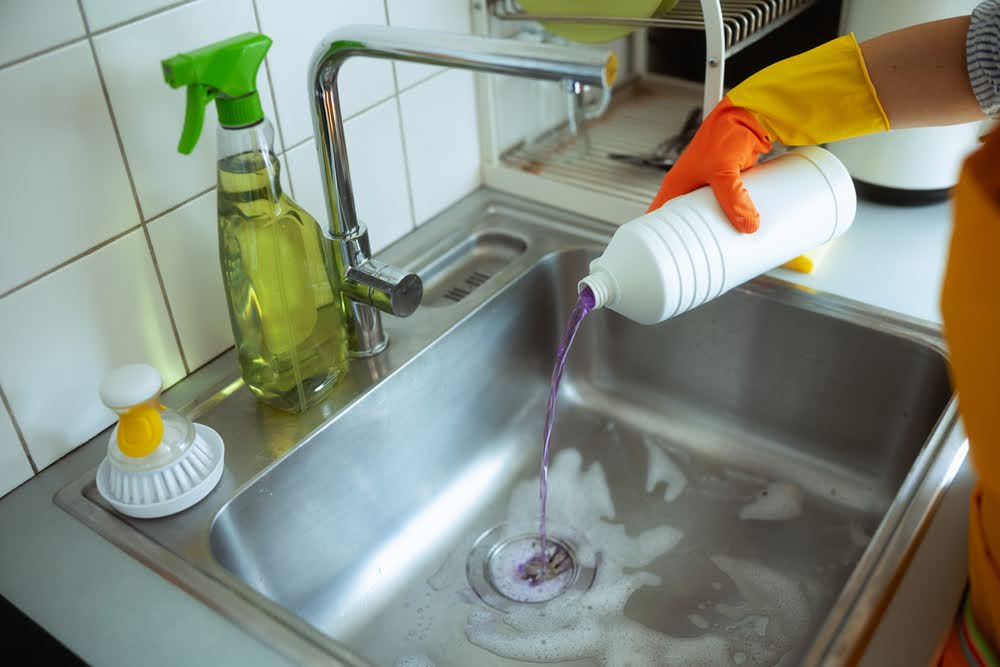
A person in rubber gloves pours purple drain cleaner into a stainless steel sink in a brightly lit kitchen setting, ready to unclog a drain.
What is the most effective DIY drain cleaner?
Baking soda and vinegar for safe buildup removal. For hair: manual removal with drain snake ($3-10) outperforms any liquid cleaner.
Do baking soda and vinegar really clean drains?
Yes, ideal for light buildup and preventive maintenance. Won’t clear complete blockages or tree roots; those need professional equipment.
What will dissolve hair in a clogged drain?
Hair resists chemicals. Enzyme cleaners with proteases work slowly (overnight). Manual extraction with drain snakes is faster and more effective.
What do plumbers say about baking soda and vinegar?
Great for monthly maintenance and minor clogs. Safe for all pipes and septic systems. Won’t handle tree roots, mainline issues, or complete blockages.
How often should I clean drains preventively?
Weekly hot water flushes (2 min). Monthly baking soda and vinegar. Install drain strainers and clean weekly. This cuts clogs by 50%.
Can I use chemical cleaners after trying baking soda and vinegar?
No. Never mix methods, especially chemicals. If natural methods don’t work after 2 attempts, call a professional.
What’s the safest way to clear a completely clogged drain?
Manual removal with a drain snake. For deep clogs or main line issues, professional mechanical snaking or hydro jetting is the only safe option.
Will baking soda and vinegar damage pipes?
No. Safe for PVC, metal, and all pipe types. Mild fizzing without heat or corrosion, unlike chemical cleaners that warp and corrode.
How do I know if my clog needs professional help?
Call if it doesn’t clear after 2 DIY attempts, water backs up into other fixtures, multiple drains clog, there’s a sewage smell, or there’s gurgling from other drains.
What’s the best way to prevent drain clogs?
Drain strainers ($5-15), never pour grease down drains, brush hair before showering, hot water after each use, monthly baking soda/vinegar maintenance.